
Guest-Ready Staging: Small Touches That Make a Clean Rental Feel Welcoming
Guest-Ready Staging: Small Touches That Make a Clean Rental Feel Welcoming
Guests notice more than whether a rental is clean. They notice whether there is somewhere to put a suitcase, whether the bathroom supplies are easy to find, and whether they can turn on a lamp without moving furniture. Effective Airbnb guest ready staging connects cleanliness with usability. For Airbnb and Vrbo hosts, the goal is simple: make arrival feel effortless without adding clutter or slowing down every turnover.
1. Finish Cleaning Before You Start Styling
Staging is the final layer, not a substitute for cleaning or maintenance. Decorative pillows cannot compensate for crumbs beneath a sofa, and a neatly folded towel should never hide a stained countertop. Complete cleaning, inspect the results, and address obvious maintenance issues before arranging guest-facing items.
Keep the sequence consistent: clean, inspect, replenish, then stage. This prevents fresh linens from being placed on surfaces that still need attention. A documented vacation rental turnover process should distinguish cleaning tasks from presentation tasks so neither gets overlooked.
- Check mirrors, fixtures, counters, and other visible surfaces under normal room lighting.
- Confirm that dishes, linens, and reusable accessories are clean and completely dry.
- Flag damaged furniture, loose handles, missing supplies, and malfunctioning lights instead of styling around them.
A shorter setup with reliable quality beats an elaborate arrangement that conceals unfinished work.
2. Stage the Arrival, Not Just the Entryway
Imagine arriving after dark with rolling luggage and a tired child. Walk from the entrance to the living area and bedroom. Remove unnecessary obstacles, make light switches accessible, and leave a clear landing spot for keys or a phone.
Give guests one obvious starting point
Place a concise welcome card where guests will naturally see it. Include the Wi-Fi network, password, host contact method, and where to find the house guide. Keep detailed rules and checkout instructions elsewhere; the first thing guests encounter should help them settle in, not feel like a warning.
- Use a clean, unobstructed entry mat and confirm the door opens freely.
- Provide a luggage rack or an obvious space for bags.
- Choose minimal decor that leaves usable space on the entry table.
- Verify that arrival lighting matches the check-in instructions and property rules.
3. Make Bedrooms and Bathrooms Immediately Usable
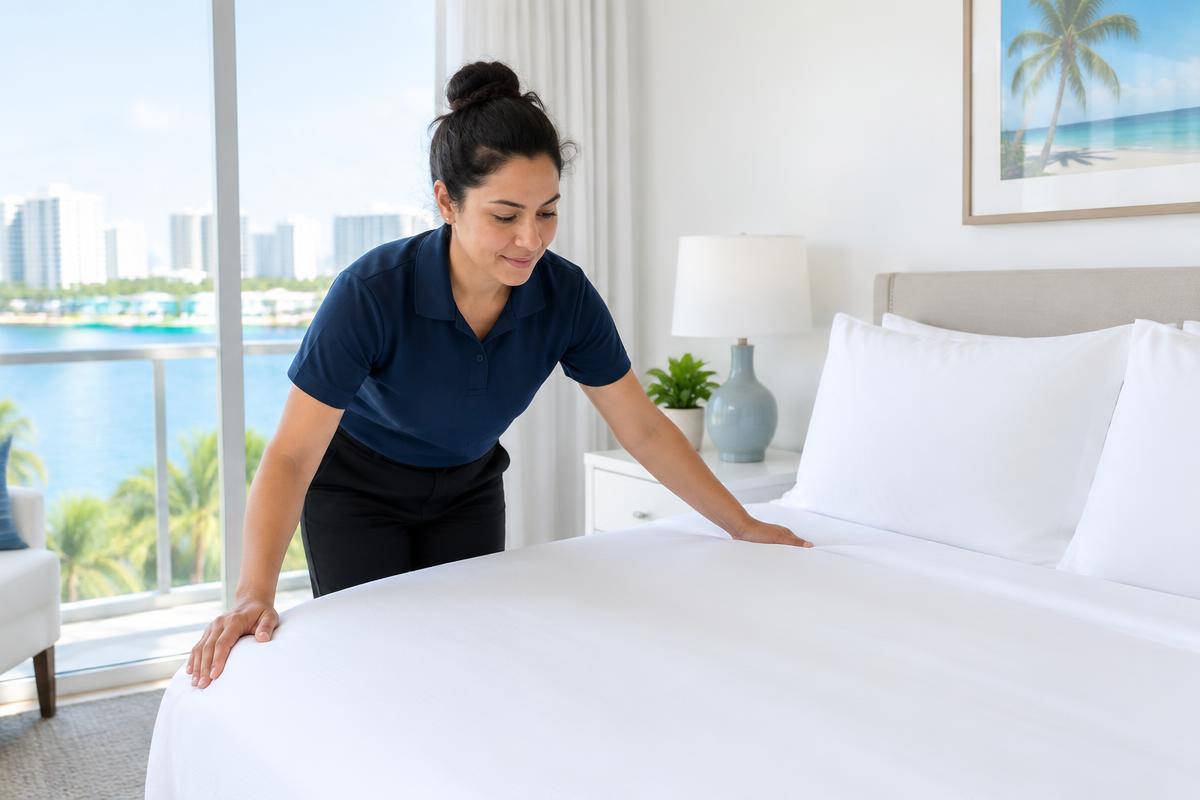
A welcoming bedroom does not need a hotel-style pillow mountain. Smooth bedding, accessible storage, and a practical bedside setup usually matter more. Limit decorative pieces to items your team can keep clean and reset consistently.
Set up the bedroom for real routines
- Leave bedside space for glasses, a phone, and a glass of water.
- Check that reading lamps work and outlets are accessible without moving heavy furniture.
- Provide matching hangers and enough empty storage for guests to unpack.
- Store extra bedding in a clean, clearly identified location rather than stacking it on the floor.
Make bathroom supplies easy to find
Set towels according to your stated occupancy and amenity policy, using the same folding and placement standard each time. Put spare toilet paper where guests can find it without searching private storage. Keep soap dispensers clean, functional, and clearly labeled.
Avoid crowding the vanity with baskets and ornaments. Guests need room for their own toiletries. Lay out a fresh bath mat safely, away from door swings, and verify that it does not create a slipping or tripping hazard.
4. Organize the Kitchen Around the First Morning
Stage the kitchen for use rather than a photograph. A clear countertop, easy-to-find mugs, and a clean coffee setup help guests start their day. Skip permanently set dining tables if the place settings collect dust or must be moved before anyone can eat.
- Group coffee equipment and any promised supplies together, away from sink splashes.
- Keep dishes and utensils in logical locations, with small cabinet labels only where helpful.
- Provide a fresh kitchen towel, suitable dish-cleaning supplies, and accessible trash bags.
- Check consumable packaging and expiration dates; remove leftovers of uncertain origin.
If you offer welcome snacks, choose sealed items with ingredient labels and follow a consistent replacement policy. Avoid homemade or unlabeled foods. A tidy, fully stocked essentials area is more useful than a gift basket that changes unpredictably between stays.
5. Adapt the Setup to South Florida Conditions
In Broward and Palm Beach counties, humidity, rain, and beach outings affect how a property feels at arrival. A room can look polished while feeling stuffy or damp. Check comfort as well as appearance, and follow the property's approved climate-control settings.
Never use fragrance to cover an unexplained odor. Check likely sources such as damp textiles, trash containers, or plumbing concerns, and escalate persistent odors or moisture problems for appropriate maintenance. A neutral-smelling space is generally more accommodating than strong plug-ins or heavily scented sprays.
- Separate beach towels from bath towels if beach towels are an advertised amenity.
- Provide a practical place for wet gear without blocking exits or shared walkways.
- Inspect balcony seating and outdoor cushions for cleanliness and dryness before arranging them.
- Follow building and weather procedures for outdoor furnishings; presentation should never override storm preparation.
6. Turn Good Staging Into a Repeatable Standard
Create reference photos showing the approved setup for each room. Photograph useful details: towel placement, remote controls, coffee supplies, and the welcome card. Pair those images with a short checklist and defined restocking quantities so different team members can produce the same result.
- Walk the property from the guest's arrival route.
- Compare each room with its reference photo.
- Confirm advertised amenities and essential supplies are present.
- Test key guest-facing items, including lamps and remotes.
- Record missing items or maintenance concerns and notify the responsible person.
Clarify responsibilities before the next booking: who supplies consumables, who replaces damaged accessories, and who approves substitutions? Review service FAQs and confirm property-specific expectations with your cleaning provider. Keep staging photos free of access codes, guest belongings, and other sensitive information.
The best finishing touches reduce questions and make everyday actions easier. If an accessory adds cleaning time but no comfort or usefulness, consider removing it.
FAQ
What is the difference between cleaning and guest-ready staging?
Cleaning removes dirt and prepares surfaces and items for use. Staging follows: arranging linens, organizing supplies, checking lighting, and making essentials easy to find. Neither replaces maintenance.
Do vacation rentals need welcome gifts?
No. Reliable essentials, clear arrival information, and comfortable spaces come first. If you offer gifts, keep them consistent, easy to replenish, and appropriate for guests with different preferences.
How can hosts keep staging consistent across multiple properties?
Use property-specific reference photos, supply quantities, and final inspection checklists. Standardize the process while accounting for each rental's layout, occupancy, advertised amenities, and building requirements.